Introduction
The Feast of Christ the King honors Jesus Christ as the King and ruler of all creation. The feast is observed on the last Sunday of the liturgical year, marking the conclusion of the liturgical calendar before the start of Advent.
The feast was instituted by Pope Pius XI in his encyclical Quas Primas, which was promulgated on December 11, 1925. In this encyclical, Pope Pius XI expressed concern over the increasing secularism and the rise of ideologies that sought to exclude Christ and His Church from public life. He established the Feast of Christ the King to remind Catholics and the world that Jesus Christ is the sovereign ruler over all aspects of human life.
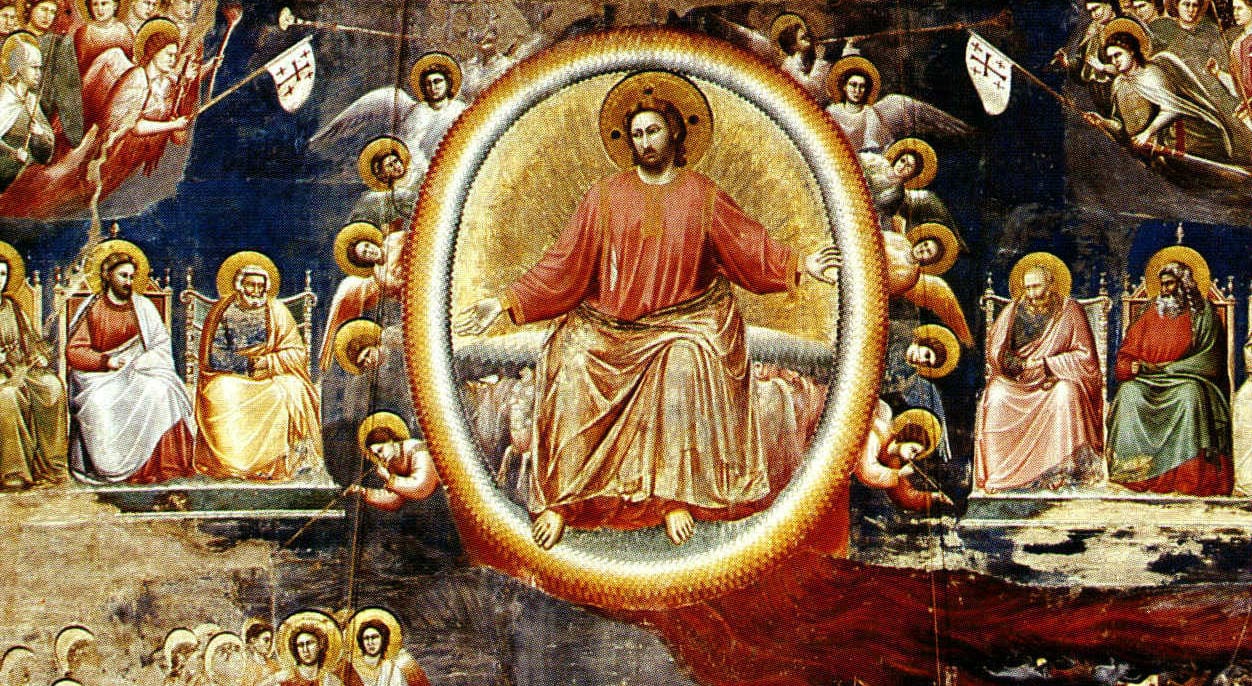
This celebration boldly proclaims Christ’s sovereignty over individuals, families, society, governments, and nations. It calls us to ponder what authority is truly lasting, and what judgment will be truly final.
1st Reading – Ezekiel 34:11-12, 15-17
Thus says the Lord GOD:
I myself will look after and tend my sheep.
As a shepherd tends his flock
when he finds himself among his scattered sheep,
so will I tend my sheep.
I will rescue them from every place where they were scattered
when it was cloudy and dark.
I myself will pasture my sheep;
I myself will give them rest, says the Lord GOD.
The lost I will seek out,
the strayed I will bring back,
the injured I will bind up,
the sick I will heal,
but the sleek and the strong I will destroy,
shepherding them rightly.
As for you, my sheep, says the Lord GOD,
I will judge between one sheep and another,
between rams and goats.
Today’s first reading provides an image of God as a good shepherd, a metaphor that aptly characterizes God’s concern and personal intervention in the lives of his people.
Ezekiel was a prophet to the exiles in Babylon. In this passage, he is comforting the people by assuring them that God will take care of them and administer justice.
Thus says the Lord GOD: I myself will look after and tend my sheep. As a shepherd tends his flock when he finds himself among his scattered sheep, so will I tend my sheep.
God has made himself a shepherd for his people.
I will rescue them from every place where they were scattered when it was cloudy and dark.
God takes an active role in searching for and rescuing his scattered sheep. He is personally involved in saving them.
The mention of a place that was cloudy and dark suggests challenging times, probably alluding to their exile. God promises to reunite his scattered flock and bring them back in from the darkness.
I myself will pasture my sheep; I myself will give them rest, says the Lord GOD.
There is no intermediary here; God reiterates his direct and personal involvement in shepherding his people. He ensures their rest and well-being.
Our earthly leaders may fail us, but God never fails. He personally sees to our comfort and safety.
“God stands guard over us when we are awake and while we sleep. If an earthly flock is safe in the vigilant care of a human shepherd, how much more secure are we, who have God as our shepherd, not only because he desires to teach and help us, but because he is our creator” (Saint Augustine, Sermones, 47).
The lost I will seek out, the strayed I will bring back, the injured I will bind up, the sick I will heal,
God is particularly interested in the most vulnerable of the flock: those who were lost or who have strayed, those who are injured or sick.
Notice all the active verbs here describing God’s shepherding: “seek out,” “bring back,” “bind up,” “heal.”
These comforting promises were fulfilled in the release of the Jews from their captivity and their re-establishment in their own land.
but the sleek and the strong I will destroy,
God’s care for his sheep includes bringing justice.
The sleek and strong represent those who have acted for their own good rather than for the good of the sheep — presumably a reference to the shepherds that he is personally replacing.
shepherding them rightly.
The Hebrew literally states that God will “feed them with justice (mishpāt),” implying divine judgment.
As for you, my sheep, says the Lord GOD, I will judge between one sheep and another, between rams and goats.
The final scene is also one of mishpāt. Those under the care of the shepherd will face an accounting as well. God is the ultimate judge of all.
This passage makes it clear that divine love is intertwined with divine justice. One does not exist without the other.
This beautiful oracle resounds in Jesus’ parable of the good shepherd (John 10:1-21), in his teaching about the Father’s joy in finding the lost sheep (Matthew 18:12-14; Luke 15:4-7), and in the insights he provides in today’s gospel reading about the Last Judgement (Matthew 25:31-46).
2nd Reading – 1 Corinthians 15:20-26, 28
Brothers and sisters:
Christ has been raised from the dead,
the firstfruits of those who have fallen asleep.
For since death came through man,
the resurrection of the dead came also through man.
For just as in Adam all die,
so too in Christ shall all be brought to life,
but each one in proper order:
Christ the firstfruits;
then, at his coming, those who belong to Christ;
then comes the end,
when he hands over the Kingdom to his God and Father,
when he has destroyed every sovereignty
and every authority and power.
For he must reign until he has put all his enemies under his feet.
The last enemy to be destroyed is death.
When everything is subjected to him,
then the Son himself will also be subjected
to the one who subjected everything to him,
so that God may be all in all.
Our second reading for today’s feast delves into the core Christian doctrine of resurrection and the exaltation of Christ.
Brothers and sisters: Christ has been raised from the dead, the firstfruits of those who have fallen asleep.
The passage begins with the foundational truth of the Christian faith: Christ’s resurrection from the dead.
In an agricultural context, the firstfruits were the initial (and best) portion of the harvest, symbolizing the promise and guarantee of the full harvest to come. The term is used here to signify that Christ’s resurrection is a precursor to the resurrection of believers.
“Paul says this in order to get at the false prophets who claimed that Christ was never born and thus cannot have died. The resurrection from the dead proves that Christ was a man and therefore able to merit by His righteousness the resurrection of the dead.” The Ambrosiaster (366-384 AD), Commentaries on Thirteen Pauline Epistles]
For since death came through man, the resurrection of the dead came also through man. For just as in Adam all die, so too in Christ shall all be brought to life,
Paul draws a sharp contrast between Adam, who introduced death, and Christ, who brought resurrection and life.
As the first human, Adam represents the entire human race, a concept reflected in Adam’s name: the Hebrew word ādām carries both singular (an individual human being) and collective meanings (the whole human race).
Adam’s sin brought death to the world, affecting all of humankind. Similarly, Jesus’s resurrection allows all of humanity to partake in the resurrected life.
Contrasting Adam and Christ this way is a favorite theme of Paul’s (Romans 5:12-21; 1 Corinthians 15:45-49). Jesus is the new Adam, bringing life where Adam brought death.
“The very human nature which was cast down must itself also gain the victory. For it was by this means that the reproach was wiped away.” [Saint John Chrysostom (ca. 392 AD), Homilies on the First Epistle to the Corinthians 39,5]
but each one in proper order: Christ the firstfruits; then, at his coming, those who belong to Christ;
Paul introduces the concept of a specific order in the resurrection. Having already been resurrected, Christ is the firstfruits. When Christ returns, believers will be raised.
then comes the end,
Only when this has taken place will the end (télos) come, the final culmination of God’s plan.
when he hands over the kingdom to his God and Father, when he has destroyed every sovereignty and every authority and power.
Christ, having completed his redemptive mission, hands everything over to the Father. During this time every opposing power will be defeated.
“What rule and power will Christ destroy? That of the angels? Of course not! That of the faithful? No. What rule is it then? That of the devils, about which He says that our struggle is not against flesh and blood but against the principalities, the powers and the forces of darkness in this present age.” [Saint John Chrysostom (392 AD), Homilies on the First Epistle to the Corinthians 39,6]
For he must reign until he has put all his enemies under his feet. The last enemy to be destroyed is death.
Alluding to Psalm 110:1, Paul sketches a picture of the risen Christ with his foot on the neck of his enemies, including death itself. This image of one’s enemies being underfoot was a common portrayal of victory in the ancient Near East.
When everything is subjected to him, then the Son himself will also be subjected to the one who subjected everything to him, so that God may be all in all.
At the end of time, all will return to God.
From the beginning, God was the purpose and the end of all things. All reality will have come home, under the completeness and perfection of God’s reign.
Gospel – Matthew 25:31-46
Jesus said to his disciples:
“When the Son of Man comes in his glory,
and all the angels with him,
he will sit upon his glorious throne,
and all the nations will be assembled before him.
And he will separate them one from another,
as a shepherd separates the sheep from the goats.
He will place the sheep on his right and the goats on his left.
Then the king will say to those on his right,
‘Come, you who are blessed by my Father.
Inherit the kingdom prepared for you from the foundation of the world.
For I was hungry and you gave me food,
I was thirsty and you gave me drink,
a stranger and you welcomed me,
naked and you clothed me,
ill and you cared for me,
in prison and you visited me.’
Then the righteous will answer him and say,
‘Lord, when did we see you hungry and feed you,
or thirsty and give you drink?
When did we see you a stranger and welcome you,
or naked and clothe you?
When did we see you ill or in prison, and visit you?’
And the king will say to them in reply,
‘Amen, I say to you, whatever you did
for one of the least brothers of mine, you did for me.’
Then he will say to those on his left,
‘Depart from me, you accursed,
into the eternal fire prepared for the devil and his angels.
For I was hungry and you gave me no food,
I was thirsty and you gave me no drink,
a stranger and you gave me no welcome,
naked and you gave me no clothing,
ill and in prison, and you did not care for me.’
Then they will answer and say,
‘Lord, when did we see you hungry or thirsty
or a stranger or naked or ill or in prison,
and not minister to your needs?’
He will answer them, ‘Amen, I say to you,
what you did not do for one of these least ones,
you did not do for me.’
And these will go off to eternal punishment,
but the righteous to eternal life.”
On the feast of Christ the King, we read the last part of Jesus’ discourse about the end times, a passage known as the “Judgment of the Nations” or the “Sheep and the Goats.”
The scene of the Last Judgment that unfolds is both sobering and surprising. Jesus describes how he will separate people as a shepherd separates sheep from goats based on their actions and treatment of others. It is a collective judgment for all of humanity at the end of time, revealing the final destinies of both the living and the dead.
This final collective judgment is not the same as the particular judgment, which occurs immediately after death. For those who die before Jesus returns, the pronouncement made at the end of time will merely serve as a public and formal confirmation of the sentence already passed.
Jesus said to his disciples: “When the Son of Man comes in his glory, and all the angels with him, he will sit upon his glorious throne,
Jesus describes a vision of the future, at the end of time. It depicts the arrival of the Son of Man, a title Jesus often used for himself, in a glorious manifestation with accompanying angels.
The image of sitting on a glorious throne conveys the authority and kingship of Christ. The entire scene is reminiscent of the apocalyptic imagery described by the prophets (Daniel 7:13-14) and in the Book of Revelation (20:11-12).
and all the nations will be assembled before him.
Note the universalism: all people are brought before him for judgment and sentencing. Before the end of time, the gospel will have been preached throughout the world (see Matthew 24:14), and all will be judged on their response to it.
And he will separate them one from another, as a shepherd separates the sheep from the goats.
Jesus employs a metaphor of a shepherd separating sheep from goats, a practice well-known to his audience and still observed in Palestine today. The sheep and goats graze together but are divided when it’s time for them to be fed or relocated.
He will place the sheep on his right and the goats on his left. Then the king will say to those on his right, ‘Come, you who are blessed by my Father. Inherit the kingdom prepared for you from the foundation of the world.
Sheep, which are more valuable than goats, represent the righteous. They are placed at the Son of Man’s right hand, the place of privilege.
With a blessing, they are invited into the kingdom. The kingdom was prepared from the foundation of the world, showing the eternal nature of God’s plan.
For I was hungry and you gave me food, I was thirsty and you gave me drink, a stranger and you welcomed me, naked and you clothed me, ill and you cared for me, in prison and you visited me.’
Jesus identifies specific acts of kindness and compassion that characterize the righteous. The emphasis is not on great feats and accomplishments but on meeting the most basic human needs of others — practical expressions of love and care.
Then the righteous will answer him and say, ‘Lord, when did we see you hungry and feed you, or thirsty and give you drink? When did we see you a stranger and welcome you, or naked and clothe you? When did we see you ill or in prison, and visit you?’
The righteous express surprise, indicating that their acts of kindness were not driven by recognition of serving the Son of Man directly. These acts were motivated by genuine compassion, without an expectation of personal gain.
And the king will say to them in reply, ‘Amen, I say to you, whatever you did for one of these least brothers of mine, you did for me.’
The term “these least brothers of mine” refers to individuals who are vulnerable, marginalized, or in need. Jesus states that there is a profound connection between himself and those in a state of need.
The simplest acts of compassion are works of Christian charity when we see Christ in others.
Then he will say to those on his left, ‘Depart from me, you accursed, into the eternal fire prepared for the devil and his angels.
Eternal fire as a symbol of divine judgment and punishment has roots in the prophetic and apocalyptic traditions of the Old Testament (Isaiah 66:24, Daniel 12:2). It also appears in Revelation (see Revelation 14:6-13).
For I was hungry and you gave me no food, I was thirsty and you gave me no drink, a stranger and you gave me no welcome, naked and you gave me no clothing, ill and in prison, and you did not care for me.’
This enumeration of neglectful actions shows the seriousness of sins of omission (failure to do something one should do).
We will be held accountable not only for the evil we have done but also for the good we have omitted.
Then they will answer and say, ‘Lord, when did we see you hungry or thirsty or a stranger or naked or ill or in prison, and not minister to your needs?’ He will answer them, ‘Amen, I say to you, what you did not do for one of these least ones, you did not do for me.’
Similar to the righteous, the unrighteous are surprised at the connection between their actions and the judgment, and Jesus reiterates the connection between him and the marginalized.
This profound connection between Christ and believers is the basis of the command to love one’s neighbor.
This teaching shows that Christianity is not simply about doing good. Helping others only takes on supernatural value when it is done out of love — love for Christ and love for others. This is why Saint Paul asserts that “if I give away all that I have… but have not love, I gain nothing” (1 Corinthians 13:3).
Any interpretation of Jesus’ teaching on the Last Judgment that confuses mere philanthropy with genuine Christian charity misses the point.
And these will go off to eternal punishment, but the righteous to eternal life.”
This profound passage holds three major themes:
- There will be a Last Judgment at the end of time;
- Christ identifies himself intimately with those in need: the hungry, the thirsty, the naked, the sick, the imprisoned;
- The consequences of our actions (or inaction) are eternal; the sinful will receive an eternal punishment and the just an eternal reward.
Connections and Themes
Judgment. We’ve reached the end of the liturgical year; next week, the season of Advent begins. Throughout Ordinary Time, we have studied discipleship, exploring the everyday journey of following Christ. We have seen that discipleship is not just a commitment to personal piety or adherence to rituals; we are responsible for our neighbors and for the world around us. Today we see this responsibility brought to completion. The attention we give to those in need determines our future.
The kingdom of God is an inclusive kingdom with a universal scope. Membership isn’t based on conformity to rituals, but on the bonds of covenantal love that unite us to one another. These are the bonds of compassion and concern, bonds that reach deep into the human heart.
The kingdom of God is established, brick by brick, through simple acts of kindness: giving food and drink, shelter and clothing; spending time with someone who might be lonely or afraid; patiently waiting for an elderly person; thanking people for their service.
You did it for Me. When we love others, especially those in need or distress, we are loving Christ. Christ’s connection with those who are suffering is especially profound; when we encounter people in need, we are seeing the presence of Christ in them.
When we reach out to those in need, it’s not the glorified Christ we see in them, but the suffering Christ. We see fear, shame, brokenness, and loss. It can be extremely difficult to confront this suffering, so we often turn away.
Even worse, we tend to help only those we consider to be “the worthy poor,” those who meet our standards. But it is those who don’t meet those standards, the ones completely rejected by society, that are most closely identified with Christ. Turning away from them means missing an opportunity to connect with the divine.
The end. Today we celebrate the culmination of God’s plan for us. In the end, after taking on the frailty of human nature and humbling himself through poverty, suffering and death, Christ conquers all.
The kingdom he has established defies human expectations: It is not a kingdom of the strong but of the weak. It doesn’t require strength to ignore those in need, but it does take strength to overcome our selfishness and serve them. The kingdom Christ hands over to God at the end of time is a kingdom of love and care.

 Sunday Readings