Introduction
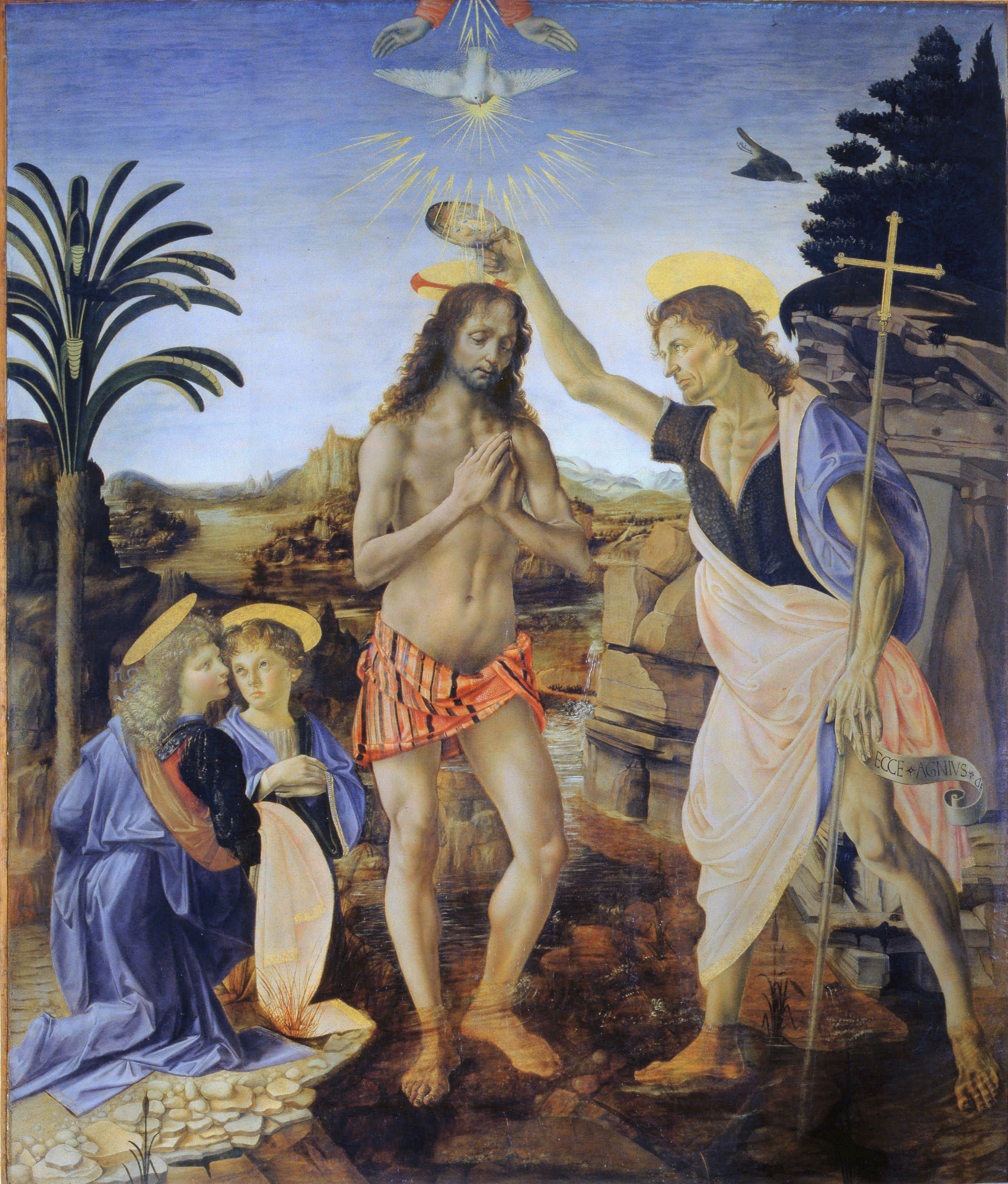
The Feast of the Baptism of the Lord invites us to reflect on the profound significance of Christ’s baptism in the Jordan River by John. In this moment, Jesus identifies himself fully with humanity, stepping into the waters of repentance — not because he is sinful, but to sanctify the waters for all who would follow him.
Many of the Church Fathers, as well as the medieval scholastics, saw Christ’s Baptism as the institution of the sacrament. It also marked the beginning of his public ministry.
Liturgically this feast serves as a bridge. It brings to a close the liturgical Christmas season, which reveals who God is for us and who we are to be for others in Christ, and begins the period in the liturgical calendar called Ordinary Time.
During Ordinary Time, we are guided chronologically through the gospel readings from the beginning of Jesus’ public ministry through his entry into Jerusalem for his passion, death, and resurrection; an event for which we interrupt the cycle of Ordinary Time to celebrate during the Easter season.
During Cycle A, the gospel readings come from Matthew, during Cycle B, from Mark, and during Cycle C, from Luke.
1st Reading – Isaiah 42:1-4, 6-7
Thus says the LORD:
Here is my servant whom I uphold,
my chosen one with whom I am pleased,
upon whom I have put my spirit;
he shall bring forth justice to the nations,
not crying out, not shouting,
not making his voice heard in the street.
a bruised reed he shall not break,
and a smoldering wick he shall not quench,
until he establishes justice on the earth;
the coastlands will wait for his teaching.
I, the LORD, have called you for the victory of justice,
I have grasped you by the hand;
I formed you, and set you
as a covenant of the people,
a light for the nations,
to open the eyes of the blind,
to bring out prisoners from confinement,
and from the dungeon, those who live in darkness.
Our first reading is the first of four passages traditionally known as the Servant Songs of Isaiah (the other three are Isaiah 49:1-6, 50:4-9, and 52:13-53:12). These songs constitute a unique set of poems that identify a mysterious figure: the ideal Servant of God, the perfect Israelite, whose consecration to the divine will, even in the midst of terrible suffering, shall take away the sins of many (Isaiah 53:2).
This passage was written during the Babylonian exile (587-537 BC) to give the people hope in the midst of their suffering.
Thus says the LORD: Here is my servant whom I uphold, my chosen one with whom I am pleased,
The identity of the Suffering Servant in Isaiah has been the subject of theological reflection and debate for centuries, with interpretations varying based on historical, literary, and theological perspectives.
- In many places, the Servant is explicitly identified as Israel (Isaiah 41:8-9, 49:3).
- Some scholars see the Servant as representing a faithful subset of Israel — a subset of the nation that remains steadfast to God amidst widespread sin and idolatry, enduring suffering as part of their covenantal mission.
- Within Jewish tradition, the Servant is sometimes seen as a future messianic figure, a divinely anointed leader who would restore Israel and bring justice to the nations.
- Christians traditionally view the Suffering Servant as a prophetic foreshadowing of Jesus Christ, whose life, death, and resurrection embody the Servant’s mission and suffering.
Throughout Scripture, very few people were called “my servant” by God: Abraham (Genesis 26:24), Moses (Numbers 12:7), Caleb (Num 14:24), Job (Job 1:8), and, most frequently, David (2 Samuel 3:18).
For Isaiah’s audience — exiles in Babylon who likely understood the Servant as the nation of Israel — God’s words carried profound comfort. The Babylonian exile was a devastating period, causing the Israelites to question the very foundation of their covenant relationship with God. Had they misunderstood their identity as God’s chosen people? Was the promise to David, that his kingdom would endure forever, now void?
God’s declaration, however, is a resounding affirmation: Here is my servant whom I uphold. The exiles’ suffering is not evidence of abandonment but rather part of God’s larger purpose. Their role as the Servant remains intact, and through their trials, they are called to be a light to the nations and witnesses to God’s justice and faithfulness.
upon whom I have put my spirit;
Being endowed with the Spirit of God was even more significant than being called “my servant.” Israelite leaders who received God’s spirit, such as judges (Judges 6:34; 11:29,32; 14:19), kings (1 Samuel 16:13), and prophets (Micah 3:8; Ezekiel 11:5), were given divine authority and a mission rooted in God’s will.
he shall bring forth justice to the nations,
The servant’s mission is to deliver justice, not only to Israel but to all nations.
“Justice” (mishpat) refers not just to legal fairness but to the establishment of God’s order, peace, and righteousness on earth.
Not crying out, not shouting, not making his voice heard in the street.
The Servant’s approach is one of humility and gentleness, reflecting the quiet strength of one who trusts in God.
A bruised reed he shall not break, and a smoldering wick he shall not quench, until he establishes justice on the earth;
Isaiah describes the Servant’s compassion and care for the weak and vulnerable. A “bruised reed” represents people who are fragile or struggling; the “smoldering wick” symbolizes those whose faith or hope is flickering.
The Servant will not compound the distress of an already suffering people, but will rather be a source of consolation.
the coastlands will wait for his teaching.
Here we learn that the servant is also a teacher. Teaching was a task never performed by kings, but only by prophets (Isaiah 8:16; Zechariah 7:12) and priests (Jeremiah 2:8; Ezekiel 7:26).
The “coastlands” (distant nations) emphasize the global scope of the Servant’s mission. His teaching is eagerly awaited by all.
I, the LORD, have called you for the victory of justice, I have grasped you by the hand; I formed you, and set you as a covenant of the people,
God, now speaking directly to the Servant, is emphasizing the deliberateness of his choice: I called you, I grasped you, I formed you, I set you.
a light for the nations,
Through their suffering and subsequent salvation, the Israelites will bring other nations to a knowledge of God.
to open the eyes of the blind, to bring out prisoners from confinement, and from the dungeon, those who live in darkness.
This list of specific kinds of suffering is probably intended to represent any form of darkness, confinement, or ailment.
The entire world will be rescued from every type of suffering.
2nd Reading – Acts 10:34-38
Peter proceeded to speak to those gathered
in the house of Cornelius, saying:
“In truth, I see that God shows no partiality.
Rather, in every nation whoever fears him and acts uprightly
is acceptable to him.
You know the word that he sent to the Israelites
as he proclaimed peace through Jesus Christ, who is Lord of all,
what has happened all over Judea,
beginning in Galilee after the baptism
that John preached,
how God anointed Jesus of Nazareth
with the Holy Spirit and power.
He went about doing good
and healing all those oppressed by the devil,
for God was with him.”
Today’s second reading takes place at the home of Cornelius, a Roman centurion. Cornelius was attracted to Judaism’s monotheistic beliefs and strict code of ethics. He attended synagogue services and observed the Ten Commandments but did not become a full member of the Jewish community (which required circumcision and observance of dietary restrictions).
Earlier in this chapter of Acts, Cornelius was visited by an angel while he was at prayer, who directed him to summon Peter from Joppa. When Peter arrived and heard about Cornelius’ vision, he responded by instructing Cornelius about the life, death, and messiahship of Jesus.
Then Peter proceeded to speak and said, “In truth, I see that God shows no partiality.
This verse marks the opening of Peter’s address to Cornelius. Peter begins with a striking admission of a divine revelation — that God does not favor any one nation or people but welcomes all who fear him and do what is right.
“In truth I see” indicates that this is a newly gained insight for Peter. Just before the summon from Cornelius, he received a vision that instructed him not to call any person profane or unclean (Acts 10:28).
Rather, in every nation whoever fears him and acts uprightly is acceptable to him.
God’s acceptance is based on reverence (fear of the Lord) and moral conduct rather than lineage or cultural identity.
This is a pivotal moment in the early Church, signaling the inclusion of Gentiles in God’s plan of salvation. The prevailing Jewish belief was that adherence to the Law of Moses was the sole means of being pleasing to God.
You know the word that he sent to the Israelites as he proclaimed peace through Jesus Christ, who is Lord of all,
Peter presumes that since Cornelius and his family lived in Judea, they had heard something about the life and ministry of Jesus.
Notice how Peter subtly yet profoundly affirms two essential truths: Jesus is the Christ, the long-awaited Messiah of Israel, and his authority is universal (“Lord of all”), extending beyond all boundaries of nation, culture, and belief.
what has happened all over Judea, beginning in Galilee after the baptism that John preached,
John the Baptist was a well-known nonconformist whose fiery preaching and call to repentance made him an irritant to the Jewish leadership and a potential concern for the Roman authorities.
A centurion stationed in this small country would recognize John’s name, even if only from gossip.
how God anointed Jesus of Nazareth with the Holy Spirit and power.
This is probably a reference to Jesus’ baptism, when the heavens opened and the Spirit descended upon him (Luke 3:21-22).
Peter may also be alluding to Isaiah 61:1, which Jesus quoted in reference to himself in the synagogue in Nazareth (Luke 4:18).
He went about doing good and healing all those oppressed by the devil, for God was with him.”
Jesus’ actions of healing and delivering the oppressed demonstrate the arrival of God’s kingdom on earth.
Peter highlights Jesus’ healing of those oppressed by the devil, underscoring his compassion for those deemed the most unclean by society. Unlike others who marginalized the possessed, Jesus touched and healed them, demonstrating that no one is beyond the reach of God’s mercy.
By entering a Gentile home — a significant cultural and religious taboo for observant Jews — Peter models Jesus’ radical inclusivity, affirming that God’s salvation extends to all people, regardless of their background.
Gospel – Luke 3:15-16, 21-22
The people were filled with expectation,
and all were asking in their hearts
whether John might be the Christ.
John answered them all, saying,
“I am baptizing you with water,
but one mightier than I is coming.
I am not worthy to loosen the thongs of his sandals.
He will baptize you with the Holy Spirit and fire.”
After all the people had been baptized
and Jesus also had been baptized and was praying,
heaven was opened and the Holy Spirit descended upon him
in bodily form like a dove.
And a voice came from heaven,
“You are my beloved Son;
with you I am well pleased.”
In Luke’s account of Jesus’ baptism, we hear of the people’s anticipation of the Messiah, John’s humility in pointing to Jesus, and the divine revelation that affirms Jesus’ identity as God’s beloved Son.
It is also one of the clearest depictions of the Trinity in Scripture: the Father’s voice, the Son being baptized, and the Spirit descending like a dove.
The people were filled with expectation, and all were asking in their hearts whether John might be the Messiah.
For centuries, the Jewish people had lived without a recognized prophetic voice. The last words of prophecy, spoken 400 years earlier by Malachi, had promised the coming of Elijah to prepare the way for the Lord (Malachi 4:5-6). Since that time, a long silence had settled over Israel, a silence marked by foreign domination, cultural upheaval, and an ever-deepening yearning for divine intervention. During this intertestamental period, the Jewish people faced the rise and fall of empires — the Persians, the Greeks under Alexander the Great, and finally the Romans. Through it all, they clung to the promises of their Scriptures, waiting for God to fulfill his covenant and send the Messiah.
Now, John the Baptist emerges from the wilderness, his fiery preaching breaking the long silence. His message of repentance and his bold declaration that the kingdom of God is near stirred the people’s hope. Oppressed by Roman rule and longing for liberation, the people flock to John, hoping that his words signal the dawn of a new era and the arrival of the Messiah who would bring justice and restoration.
John answered them all, saying, “I am baptizing you with water, but one mightier than I is coming. I am not worthy to loosen the thongs of his sandals. He will baptize you with the Holy Spirit and fire.
In three ways, John contrasts himself with the Messiah:
- The Messiah is mightier than John.
- The Messiah is far superior to John — the menial task of loosening sandals was even below the dignity of a Hebrew slave.
- John’s baptism is prepatory; the Messiah’s baptism is transformative.
In Scripture, fire often indicates the presence of God (Genesis 15:17; Exodus 3:1-4; Numbers 14:14).
After all the people had been baptized and Jesus also had been baptized and was praying,
In Luke’s gospel there is no description of the actual event of Jesus’ baptism. Instead, he describes what happened while Jesus was at prayer, after the baptism had occurred.
Prayer is a central theme in Luke, and the evangelist highlights Jesus’ consistent communion with the Father, particularly during critical events in his ministry (Luke 6:12-13, 9:28-29, 22:39-46, etc.).
heaven was opened
Through baptism, the path to heaven — once closed by original sin — is now opened, giving the baptized access to divine grace and eternal life.
and the Holy Spirit descended upon him in bodily form like a dove.
The deliberate use of the phrase “in bodily form,” which is unique to Luke, is very interesting. It suggests that the Holy Spirit was visible to all as a tangible manifestation.
And a voice came from heaven, “You are my beloved Son; with you I am well pleased.”
As if to affirm Jesus’ identity and his mission, a voice from heaven speaks.
The words “You are my beloved Son” allude to Psalm 2, which speaks of the messiah as both a king and son (see Psalm 2:6-8). This reiterates what Luke already taught in his story of The Annunciation: Jesus is God’s son, begotten of God.
While this declaration exalts Jesus, calling him the beloved Son, it also subtly foreshadows the suffering he must endure. The phrase “with you I am well pleased” echoes Isaiah’s prophecy in our first reading about the Servant of the Lord, who would bring salvation through both joy and deep suffering (Isaiah 42:1, 53). The servant would unite Israel and be a light to the nations, but this would come at the cost of great affliction (Isaiah 49:5, 42:6).
Connections and Themes
The baptism of Jesus. Jesus’ baptism inaugurates him as the Christ, the anointed Messiah of God. Our first reading indicates the kind of Messiah he will be – not executing harsh justice or wielding a sword of vengeance, but a gentle servant. The characteristics of the Messiah are contradictory: he is gentle, but mighty; he is chosen by the almighty God, but committed to the poor and the marginalized; he comes from an insignificant village, but is anointed with the Holy Spirit. Jesus challenged the long-held expectations of the Messiah by embracing humility, service, and compassion instead of power, conquest, and dominance.
A messiah for all. Our second reading demonstrates that salvation through Christ is not limited to a particular group or nation, but is open to everyone. He came for the people who were broken and suffering, for those who were blind, for those who were marginalized by society. He came for people like Cornelius, a Roman centurion who, as a Gentile and a figure of Roman military authority, was deeply despised by the Jewish community. This radical inclusion challenges us to rethink our own boundaries, showing that God’s love is for all, regardless of their position in society
Cosmic ramifications. Through Christ, the Suffering Servant, God has fashioned a new society — one of justice, compassion, healing, and liberation from sin. In Jesus, all creation is made new. Walls of hatred have crumbled, and all are bound together in the peace of Christ.
Through our baptism, we become part of this new creation, called to spread the good news of God’s transformation to all corners of the earth. As disciples of Christ, we continue the servant ministry he took upon himself; it is now through us that God re-creates society. The Christmas season ends with us as participants in the servant messiahship of Jesus.

 Sunday Readings