Introduction
Having completed our long and joyful celebration of Easter — which centered on the mystery of the Risen Christ, the Second Person of the Trinity — and having just commemorated the outpouring of the Holy Spirit at Pentecost, today the Church invites us to contemplate the fullness of the divine mystery: one God in three Persons.
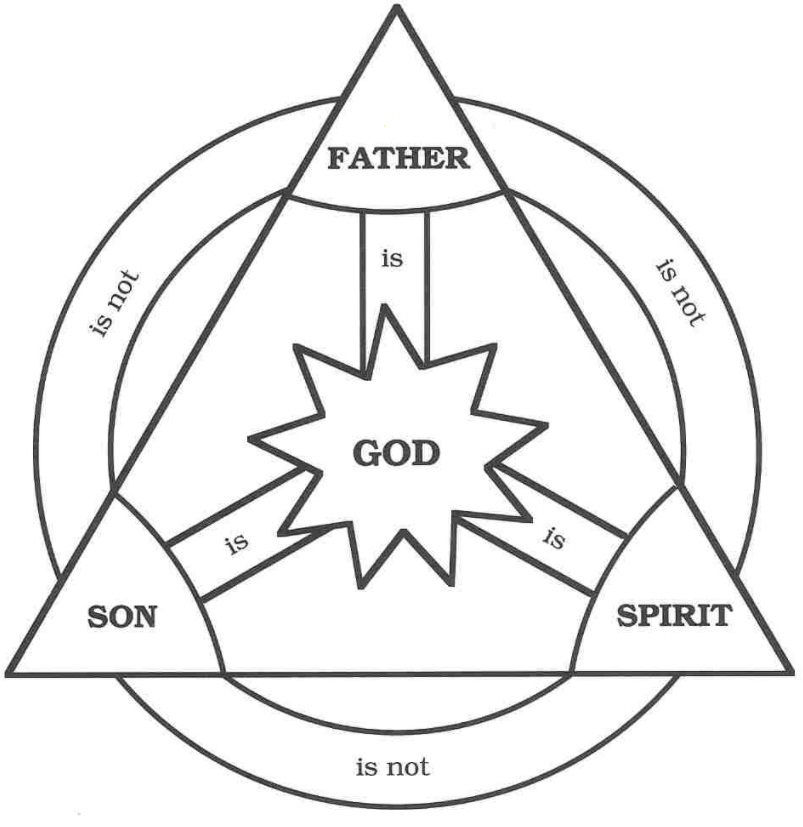
The central mystery we celebrate today is this: There is one God, and in this one God, there are three Divine Persons; the Father is God, the Son is God, and the Holy Spirit is God. Yet there are not three Gods, but one, eternal, incomprehensible God.
The Solemnity of the Most Holy Trinity can be seen as a culmination of all the preceding celebrations. Each major feast reveals one facet of the Triune God’s saving work:
- Christmas and Epiphany reveal the Father’s gift of the Son;
- Easter and the Ascension celebrate Christ’s redemptive mission;
- Pentecost marks the Spirit’s descent upon the Church.
All three Persons, distinct yet united, are present in our redemption.
1st Reading – Proverbs 8:22-31
Thus says the wisdom of God:
“The LORD possessed me, the beginning of his ways,
the forerunner of his prodigies of long ago;
from of old I was poured forth,
at the first, before the earth.
When there were no depths I was brought forth,
when there were no fountains or springs of water;
before the mountains were settled into place,
before the hills, I was brought forth;
while as yet the earth and fields were not made,
nor the first clods of the world.
“When the Lord established the heavens I was there,
when he marked out the vault over the face of the deep;
when he made firm the skies above,
when he fixed fast the foundations of the earth;
when he set for the sea its limit,
so that the waters should not transgress his command;
then was I beside him as his craftsman,
and I was his delight day by day,
playing before him all the while,
playing on the surface of his earth;
and I found delight in the human race.”
Today’s first reading offers a poetic and profound meditation on divine Wisdom, which the Church has long understood as closely associated with the Second Person of the Trinity: Jesus Christ, the Eternal Word.
It presents Wisdom as eternal and distinct, yet with God, hinting at the pre-existence and divinity of the Son, who was with the Father from the beginning. This prepares the way for us to grasp, later as revelation progresses, the mystery of the Blessed Trinity.
Thus says the wisdom of God: “The LORD possessed me, the beginning of his ways, the forerunner of his prodigies of long ago; from of old I was poured forth, at the first, before the earth.
Wisdom is personified; that is, depicted as having the features of a person. Here she is portrayed as speaking in public for all to hear (Proverbs 8:1-3).
This figure, often referred to as Woman Wisdom, has long captivated interpreters. Only a deity would have been present before creation began, and yet the Hebrew verb qānâ can be translated as both “made” and “possessed,” leaving her true nature intriguingly ambiguous.
Hebrew has no word for eternity, but mê‘ōwlām (translated here as “from of old”) signifies an indefinite period of time. “Poured forth” is an image of birth.
When we read of Wisdom being poured forth before creation, we think of the Holy Spirit. When we read of someone being present with the Father before the creation of the world, we think of Jesus, the pre-existent Word who became flesh (John 1:1-14). However, we must remember that the author of Proverbs did not share our belief in the Trinity; rather, in describing Wisdom, he is simply personifying one of God’s attributes.
When there were no depths I was brought forth, when there were no fountains or springs of water; before the mountains were settled into place, before the hills, I was brought forth; while as yet the earth and fields were not made, nor the first clods of the world.
The imagery continues to unfold the birth of creation — land, sea, sky —painting a rich, poetic vision.
The preexistence of Wisdom emphasizes that order and purpose preceded the material world.
“When the Lord established the heavens I was there, when he marked out the vault over the face of the deep; when he made firm the skies above,
when he fixed fast the foundations of the earth; when he set for the sea its limit, so that the waters should not transgress his command;
Wisdom was present when God brought order to chaos, shaping the universe as we know it.
Notice how God’s sovereign power is described with calm authority. Creation unfolds in serene, deliberate order, suggesting a universe that is rational, intelligible, and shaped by purposeful design.
then was I beside him as his craftsman,
The Hebrew ’āmôn is best translated as “craftsman” or “architect.” Wisdom is depicted as participating in creation, not as a co-creator, but as the principle through which God orders the cosmos.
This anticipates what will later be affirmed of Christ in the Nicene Creed: “through whom all things were made.”
and I was his delight day by day, playing before him all the while, playing on the surface of his earth;
The tone shifts to one of joy. Wisdom is not only present but rejoicing, like a child at play. This joy underscores the goodness of creation and the intimate delight between God and Wisdom. The universe is not only ordered, but joyous.
and I found delight in the human race.
This closing line brings the grandeur of creation down to the personal. What delights Wisdom most is her relationship with mankind.
This reflects our unique place in creation: made in God’s image, capable of relationship with the divine.
2nd Reading – Romans 5:1-5
Brothers and sisters:
Therefore, since we have been justified by faith,
we have peace with God through our Lord Jesus Christ,
through whom we have gained access by faith
to this grace in which we stand,
and we boast in hope of the glory of God.
Not only that, but we even boast of our afflictions,
knowing that affliction produces endurance,
and endurance, proven character,
and proven character, hope,
and hope does not disappoint,
because the love of God has been poured out into our hearts
through the Holy Spirit that has been given to us.
Our second reading highlights the active roles of all three Persons of the Trinity — Father, Son, and Holy Spirit — in the work of salvation and in the believer’s experience of grace.
Brothers and sisters: Therefore, since we have been justified by faith, we have peace with God
The Church teaches that justification is a process that begins with God’s grace, involves our free response (faith), and continues through baptism, obedience, and good works (cf. Council of Trent, Session VI).
In the biblical tradition, peace (shalom) signifies not mere absence of conflict but a state of right relationship and covenantal union with God.
For Paul, this peace is the fruit of justification: no longer enmity, but communion with God.
through our Lord Jesus Christ,
Christ is central to this transformation. Through his death and resurrection, he has reconciled humanity to God, becoming the mediator of the new covenant.
Salvation is wholly the work of God’s grace in Christ.
through whom we have gained access by faith to this grace in which we stand,
The language of “access” evokes the image of being ushered into the presence of royalty or someone of great stature. Such privilege is rarely granted without merit; it is typically reserved for those who have earned it or are escorted in by someone who already possesses that right.
This seems to be the image Paul wishes to create: Through Christ, we are graciously ushered into the presence of God, not by our own worthiness, but by his.
and we boast in hope of the glory of God.
This phrase reflects what is known as Paul’s already-but-not-yet eschatology. Through Christ’s death and resurrection, the kingdom of God has already broken into history, but the world is not yet fully renewed. The final fulfillment awaits Christ’s return.
Just as the justified already enjoy peace with God and access to grace, they also look ahead in hope to the full revelation of God’s glory. This hope is not wishful thinking or vague optimism. It is confident assurance, rooted in God’s promises and love. We boast — not in ourselves — but in the certainty that God will complete what he has begun.
Not only that, but we even boast of our afflictions, knowing that affliction produces endurance, and endurance, proven character, and proven character, hope,
This hope is not blind to life’s sufferings. The peace Paul previously described is not the absence of problems, but the resolute endurance of those who, grounded in hope, remain faithful through trials.
Suffering can embitter, harden, and isolate us. But when suffering is united with grace, it becomes transformative: it produces perseverance, which shapes character and deepens our hope in God. This, in turn, leads to joy and happiness (cf. James 1:2-4; 1 Peter 1:5-7).
“A person who hopes for something and strives eagerly to attain it is ready to endure all kinds of difficulty and distress. Thus, for example, a sick person, if he is eager to be healthy, is happy to take the bitter medicine which will cure him. Therefore, one sign of the ardent hope that is ours thanks to Christ is that we glory not only in the hope of future glory, but also in the afflictions which we suffer in order to attain it” (Saint Thomas Aquinas, Commentary on Romans).
and hope does not disappoint, because the love of God has been poured out into our hearts
Christian hope is secure because it is rooted in the experience of divine love.
This is not a vague or theoretical love — it is tangible and abundant, lavished into our hearts.
through the Holy Spirit that has been given to us.
Paul reveals the Trinitarian depth of salvation: the Father justifies, the Son reconciles, and the Spirit pours God’s love into our hearts.
It is through this divine outpouring that we come to share in the very life of the triune God.
Gospel – John 16:12-15
Jesus said to his disciples:
“I have much more to tell you, but you cannot bear it now.
But when he comes, the Spirit of truth,
he will guide you to all truth.
He will not speak on his own,
but he will speak what he hears,
and will declare to you the things that are coming.
He will glorify me,
because he will take from what is mine and declare it to you.
Everything that the Father has is mine;
for this reason I told you that he will take from what is mine
and declare it to you.”
The gospel reading for today’s feast provides a rich theological window into the dynamic relationship among the Father, the Son, and the Holy Spirit.
Jesus said to his disciples: “I have much more to tell you, but you cannot bear it now.
These words are part of Jesus’ farewell discourse, spoken the night before his Passion, at the Last Supper.
Aware of the emotional and spiritual limits of his disciples, Jesus acknowledges that they are not yet ready to comprehend the full meaning of his mission, especially the scandal of the cross that is about to unfold.
His words imply a future readiness, a time when they will be able to bear and understand more.
But when he comes, the Spirit of truth, he will guide you to all truth.
Jesus had previously promised the Holy Spirit (John 14:25-26).
The apostles will be able to understand in the future because they will have the Spirit guiding them “to all truth.”
The Spirit does not replace Jesus but makes present and interior the truth Jesus embodied — illuminating his life, death, and resurrection in a way the disciples could not yet grasp.
He will not speak on his own, but he will speak what he hears,
The Spirit is not the source of a new message, but faithfully communicates what he hears from the Son, who in turn speaks what he has received from the Father (cf. John 12:49).
Jesus himself is the revelation of the Father’s love. However, the world has not yet understood this revelation or the mighty saving act that the Father has accomplished through Jesus. So the Spirit will teach the same truth that Jesus has taught to a world that has not yet understood it.
and will declare to you the things that are coming.
This is not a reference to detailed predictions of future events; the “things that are coming” are Jesus’ passion, death, and resurrection.
Once they receive the Spirit, the disciples will understand these events as the fulfillment of Scripture and God’s saving plan.
He will glorify me, because he will take from what is mine and declare it to you.
The Spirit glorifies Christ by unveiling the true meaning of his saving work.
By helping the disciples understand who Jesus truly is — the crucified and risen Lord — the Spirit leads them into deeper communion with him.
Everything that the Father has is mine; for this reason I told you that he will take from what is mine and declare it to you.”
Jesus emphasizes the unity between the Father, the Son, and the Spirit. The truth the Spirit imparts comes from the Son, which in turn is the truth of the Father. This shared divine truth reflects the inner life of the Trinity — a communion of love that is extended to the Church.
The Son has revealed the Father’s love, and the Spirit has continued to teach this revelation through the centuries.
Connections and Themes
After the seasons of Lent, Easter, and Pentecost, the Church pauses on Trinity Sunday to reflect on the very nature of God: one God in three Persons. This is the mystery of a God whose inner life is love and joy, whose work encompasses creation, redemption, and sanctification, and who invites us into that life by grace
God the Creator. Our first reading and the responsorial psalm invite us to pause in awe of the One who brought it into being. In Proverbs, Wisdom is personified as being with God “at the beginning,” delighting in the work of creation and in the human race. The psalmist echoes this wonder, proclaiming, “When I behold your heavens, the work of your fingers… what is man that you should be mindful of him?” (Psalm 8).
These readings draw us into a posture of reverence before a God whose creativity knows no bounds. From galaxies to grains of sand, from stars to snowflakes, no two are exactly alike. Even among human beings, each person bears a unique reflection of the Creator’s image. What imagination. What love. Creation itself becomes a window into the inner life of God: ordered, joyful, relational.
God the Redeemer. In our second reading, Saint Paul offers one of the earliest and clearest glimpses of Trinitarian faith at work in the life of the believer. He writes of a salvation that originates in the love of God the Father, is accomplished through Jesus Christ, and is made personally known to us by the Holy Spirit: “Since we have been justified by faith, we have peace with God through our Lord Jesus Christ… and the love of God has been poured into our hearts through the Holy Spirit who has been given to us.”
For Paul, there is no ambiguity about the source or the means of our redemption. It is God who justifies, and it is Christ who opens the way to peace and grace. But this salvation is not distant or abstract — it becomes deeply personal through the Holy Spirit, who dwells in us and makes God’s love a living, active presence in our hearts.
On Trinity Sunday, we contemplate not just who God is, but how God acts: the Father sending the Son, the Son reconciling us to the Father, and the Spirit drawing us into that communion of love. This is the heart of redemption.
God the Source of Truth. In our gospel reading, Jesus speaks of the Spirit of truth who will guide the disciples into all truth, not by delivering new teaching, but by revealing more deeply what Jesus has already made known. In this brief yet profound exchange, we glimpse the dynamic relationship among the Persons of the Trinity: the Father entrusts all to the Son, and the Spirit receives from the Son in order to communicate truth to us.
Divine truth is not merely information but relationship. The Spirit does not deliver a new or separate message but deepens our understanding of what Christ has already revealed. The Spirit’s task is to lead us further into the mystery, ever more deeply into the truth that is Christ himself (cf. John 14:6).
If we only marvel at the mystery of the Trinity as a theological puzzle, we may remain at a distance. But if we receive it as the revelation of a God who shares truth with us to draw us into communion, we are moved not just to think, but to worship and cry out with the psalmist: “O Lord, our God, how wonderful your name in all the earth!”

 Sunday Readings