Introduction
The Solemnity of the Blessed Trinity was introduced in the 9th century and added to the general calendar of the Church in the 14th century by Pope John XXII.
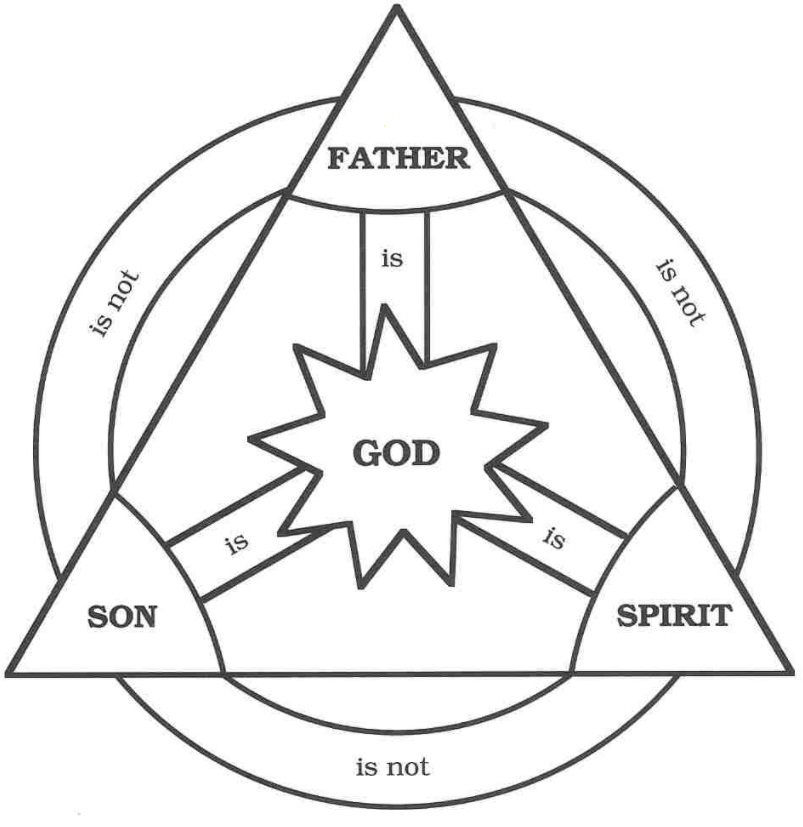
The dogma of faith we celebrate with this feast is this: there is one God, and in this one God there are three Divine Persons; the Father is God, the Son is God, the Holy Spirit is God. Yet there are not three Gods, but one, eternal, incomprehensible God.
This feast can be seen as a kind of finale to all the preceding feasts: the mystery of the Trinity is a synthesis of Christmas, Epiphany, Easter, Ascension, and Pentecost. It acknowledges the contributions of all three divine Persons to the work of redemption:
- The Father called us to the faith. The Father also sent his Son to earth, for “God so loved the world that he gave his only Son.”
- The Son, our Savior Jesus Christ, became man and died for us. He redeemed us and made us children of God.
- After Christ’s ascension, the Holy Spirit became our Teacher, our Leader, our Guide, our Consoler.
1st Reading – Exodus 34:4b-6, 8-9
Early in the morning Moses went up Mount Sinai
as the LORD had commanded him,
taking along the two stone tablets.
Having come down in a cloud, the LORD stood with Moses there
and proclaimed his name, “LORD.”
Thus the LORD passed before him and cried out,
“The LORD, the LORD, a merciful and gracious God,
slow to anger and rich in kindness and fidelity.”
Moses at once bowed down to the ground in worship.
Then he said, “If I find favor with you, O Lord,
do come along in our company.
This is indeed a stiff-necked people; yet pardon our wickedness and sins,
and receive us as your own.”
Today’s first reading tells of the second meeting Moses had with God on Mount Sinai. God’s self-revelation during this encounter provides a biblical foundation for contemplating the nature of God and His triune existence.
Earlier in Exodus, Moses led the people out of Egypt and through the desert to Mount Sinai. He ascended the mountain to receive the Ten Commandments from God, but out of impatience and fear, the Israelites constructed a golden calf to worship during his absence. In anger, Moses smashed the tablets.
The disobedience of the people incites God’s anger and Moses intercedes on their behalf, pleading for forgiveness and mercy. God relents and calls Moses to once again ascend the mountain and receive a new set of tablets.
Early in the morning Moses went up Mount Sinai as the LORD had commanded him, taking along the two stone tablets.
This event on Mount Sinai will be a significant turning point in the relationship between God and the Israelites, revealing profound insights into God’s character, mercy, and faithfulness.
Having come down in a cloud,
This cloud simultaneously reveals and conceals the presence of God.
Throughout the people’s journey in the wilderness, God led them from within a pillar of cloud (Exodus 13:21).
the LORD stood with him there and proclaimed his name, “LORD.”
Unbidden, God graciously reveals his personal name: YHWH (“the Lord”)!
Thus the LORD passed before him and cried out, “The LORD, the LORD, a merciful and gracious God, slow to anger and rich in kindness and fidelity.”
God explains what his own name means, and in so doing reveals his divine essence. (Recall that in the Hebrew tradition, names encapsulate the essence of a person.) This statement eventually became a creedal recital — see Psalm 86:15; Psalm 103:8; Psalm 145:8; Numbers 14:18; Joel 2:13; Nahum 1:3; Nehemiah 9:17; Jonah 4:2.
All of the adjectives God uses to describe himself are relational (one is merciful toward another, gracious toward another, etc.), and associated with the covenant:
- “Merciful” (rahûm) is womb love, the kind of attachment one has for the child of one’s own body, or for a sibling born from the same womb.
- “Gracious” (hannûn) is frequently used as a synonym for compassionate or merciful.
- God is “slow to anger,” reluctant to rain divine wrath on those who have violated the covenant relationship.
- “Lovingkindness” (hesed) and “fidelity” (ĕmet) characterize the steadfastness with which God clings to the covenant partners.
These dispositions show God’s intention to remain faithful to his covenant relationship with the people, which is remarkable in light of the Israelites’ profound betrayal in the golden calf incident.
Moses at once bowed down to the ground in worship.
Moses responds with worship, humbling himself in deep reverence and adoration.
Then he said, “If I find favor with you, O Lord, do come along in our company. This is indeed a stiff-necked people; yet pardon our wickedness and sins, and receive us as your own.”
Moses once more pleads for the people, leveraging the favor (hēn) he trusts he has in God’s eyes. While acknowledging that the people are difficult and stubborn, he boldly makes a threefold request: stay with us, forgive us, receive us as your own.
Notice how he identifies with the people, despite their many shortcomings: “our company,” “our wickedness,” “receive us.”
Moses’ request that God “receive us as your own,” is interesting since God had already chosen the people of Israel and entered into a covenant with them. After the Israelites’ grave misstep in the golden calf incident, Moses pleads with God to forgive them and inherit them again as God’s treasured people.
Even in the face of the people’s unfaithfulness, God’s commitment to the covenant does not waver. God will always be faithful.
The only question is whether or not the people will be faithful to God.
2nd Reading – 2 Corinthians 13:11-13
Brothers and sisters, rejoice.
Mend your ways, encourage one another,
agree with one another, live in peace,
and the God of love and peace will be with you.
Greet one another with a holy kiss.
All the holy ones greet you.
The grace of the Lord Jesus Christ
and the love of God
and the fellowship of the Holy Spirit be with all of you.
Today’s second reading comes from the closing verses of Saint Paul’s second letter to the Corinthians. It contains a Trinitarian formula that highlights the relationship between the Father, the Son, and the Holy Spirit.
Brothers and sisters, rejoice.
Paul’s farewell begins with a summons to rejoice. This joy isn’t simply delight, but a call to a deep and abiding joy in Christ Jesus that transcends external circumstances.
Mend your ways,
This directive suggests that their behavior has not been aligned with their commitment to Christ.
encourage one another,
Christians are to support and uplift each other.
agree with one another,
Some translations use the phrase “be of one mind” in this verse. Paul is likely referring to the importance of unity in matters of faith and community order, rather than just personal preferences.
This is not a casual statement. While it’s natural to have different opinions and interests within a community, heated disagreements can create significant divisions and result in factions forming.
live in peace,
The exhortation ends with a call to live in peace, a peace that can accommodate differences on a surface level due to their shared faith on a deeper level.
and the God of love and peace will be with you.
By heeding Paul’s advice, the Corinthians will encounter the loving and peaceful presence of God.
God’s presence is not a reward for faithfulness; Paul consistently emphasizes that it is through God’s grace that Christians are empowered to be faithful in the first place.
However, it’s incumbent upon us to respond to this grace in order to fully experience the love and peace that God desires to bestow upon us.
Greet one another with a holy kiss.
The custom is mentioned three other times in Paul’s letters, always with the adjective “holy” (Romans 16:16; 1 Corinthians 16:20; 1 Thessalonians 5:26).
In the East, kissing was a common way of greeting (Luke 7:45), but Paul infuses it with a deeper spiritual meaning: it is an expression of Christian love and an outward sign of their shared faith.
“What is a holy kiss? It is one that is not hypocritical, like the kiss of Judas. The kiss is given in order to stimulate love and instill the right attitude in us toward each other. When we return after an absence, we kiss each other, for our souls hasten to bond together. But there is something else which might be said about this. We are the temple of Christ, and when we kiss each other we are kissing the porch and entrance of the temple.” [Saint John Chrysostom (392 AD), Homilies on the Second Epistle to the Corinthians 30,2]
All the holy ones greet you.
“Saints” or “holy ones” (hágioi) is a common reference to members of the Christian community, those who have been set apart, sanctified by their baptism in Christ.
In this case, the “saints” who send greetings are the Christians in Macedonia, from where Paul is writing. By mentioning them, Paul is reminding the Corinthians that they are part of a much broader community of believers.
The use of hágioi underscores their calling to live in a manner that is consistent with their sanctified status.
The grace of the Lord Jesus Christ and the love of God and the fellowship of the Holy Spirit be with all of you.
Among all of Paul’s letters, this final blessing of 2 Corinthians stands out as the most profound and enlightening. Its trinitarian nature is evident.
You might find it quite familiar, as it is commonly used as the greeting at the beginning of Mass, setting a tone of unity and divine presence.
Saint Thomas Aquinas points out that this benediction refers to all necessary supernatural graces:
“The grace of Christ, by which we are justified and saved; the love of God the Father, by which we are united to him; and the fellowship of the Holy Spirit, who distributes the divine gifts to us” (Commentary on 2 Corinthians)
This blessing encapsulates the essence of God’s blessings and serves as a heartfelt expression of hope and spiritual connection, making it the perfect conclusion to the letter.
Gospel – John 3:16-18
God so loved the world that he gave his only Son,
so that everyone who believes in him might not perish
but might have eternal life.
For God did not send his Son into the world to condemn the world,
but that the world might be saved through him.
Whoever believes in him will not be condemned,
but whoever does not believe has already been condemned,
because he has not believed in the name of the only Son of God.
Our gospel reading for today is the famous excerpt from John Chapter 3. It encapsulates the central message of God’s love, salvation, and the role of the Trinity in the divine plan of redemption.
These words from Jesus are part of his conversation with Nicodemus (John 3:1-21), a Pharisee and a member of the Jewish ruling council who came to Jesus seeking to understand his teachings.
God so loved the world that he gave his only Son,
This passage focuses on the scope of divine love, which is incredibly profound and generous. It holds nothing back, not even God’s own Son, who is given for the world’s redemption.
The word here for “gave” is dídōmi, a verb associated specifically with the giving of a gift. It signifies a deliberate act of generosity.
The Jewish religious tradition, especially the writings of the prophets, frequently speaks of ancient Israel’s astonishment at God’s love for his chosen people. However, Jesus goes further: he explicitly declares God’s love for the entire world.
This love is not only unfathomably deep but universal. It is not limited to a single nation, righteous individuals, or only those who reciprocate his love.
so that everyone who believes in him might not perish but might have eternal life.
Faith in the Son who was sent is the path to eternal life.
This offer is extended to everyone by God, who wills salvation for all. However, not everyone is willing to accept this gift.
For God did not send his Son into the world to condemn the world, but that the world might be saved through him.
The world, originally created as good, became entangled in sin and often stands in opposition to God. The purpose of God sending his Son into this sinful world was not to condemn humanity but to offer the salvation it so desperately needs.
The verb for “send” is apostéllō, indicating that the Son had a sacred, all-encompassing mission to fulfill.
Whoever believes in him will not be condemned, but whoever does not believe has already been condemned,
God’s intention is to rescue and redeem rather than to pass judgment. God does not condemn, but some condemn themselves by refusing to embrace his gracious and merciful plan for humanity’s salvation.
because he has not believed in the name of the only Son of God.
As noted in our discussion of the first reading, in the Jewish culture, one’s name shares the full identity of its bearer. Rejecting the name of Christ rejects all it entails, including God’s profound offer of salvation.
Jesus requires our faith in him as the first step in sharing in God’s divine love. This faith lifts us out of darkness, brings us into the light, and puts us on the path to salvation.
Connections and Themes
The Most Holy Trinity. The Trinity is a fascinating mystery that continues to capture our imagination. How can three persons constitute one God? The Catechism of the Catholic Church outlines the dogma of the Holy Trinity this way (253-254):
The Trinity is One. We do not confess three Gods, but one God in three persons, the “consubstantial Trinity”. The divine persons do not share the one divinity among themselves but each of them is God whole and entire: “The Father is that which the Son is, the Son that which the Father is, the Father and the Son that which the Holy Spirit is, i.e. by nature one God.” In the words of the Fourth Lateran Council (1215), “Each of the persons is that supreme reality, viz., the divine substance, essence or nature.”
The divine persons are really distinct from one another. “God is one but not solitary.” “Father”, “Son”, “Holy Spirit” are not simply names designating modalities of the divine being, for they are really distinct from one another: “He is not the Father who is the Son, nor is the Son he who is the Father, nor is the Holy Spirit he who is the Father or the Son.” They are distinct from one another in their relations of origin: “It is the Father who generates, the Son who is begotten, and the Holy Spirit who proceeds.” The divine Unity is Triune.”
No matter how hard we try, we will never completely grasp the depths of this divine reality. Instead, our task is to embrace and accept it. We are called to have faith in God’s loving presence and active involvement in our lives, and this conviction should inspire us to live out our faith wholeheartedly. In today’s second reading, Paul urges us to do precisely that.
As we contemplate the nature of our Triune God and his role in our lives, we come to understand the overwhelming nature of this divine mystery, much like Moses who prostrated himself in worship. We have all experienced the touch of God’s grace, love, and fellowship, and for this, we have much to be grateful for. Today is a day for humble gratitude and renewed commitment.
Gracious and merciful. This God who surpasses our understanding is also the God who chose to intervene in our chaotic world in order to save us. This remarkable truth is evident in both the first reading and the gospel. In the Exodus reading, the language of the covenant emphasizes God’s immeasurable goodness. It is important to recognize that God’s graciousness and mercy are not rewards for our faithfulness; rather, they are freely given to us despite our sinful nature. It is through God’s saving grace that we are transformed, and it is not based on any merit of ours.
In the gospel, we are assured that Jesus was sent into the world with a mission to save, not to condemn. This radical openness and love are far beyond human comprehension, leaving us in awe and wonder. Our limited ability to fully articulate this overwhelming experience of divine exaltation itself becomes an act of praise to God.
A trinity of unity. Paul’s Trinitarian blessing in his letter to the Corinthians beautifully captures the depth of God’s love, so much so that it has become part of the Mass. This profound blessing declares that Jesus, through his death and resurrection, has opened the floodgates of divine grace, making it accessible to us. It also proclaims that the love of God has created the bonds of fellowship that unite us. As beings created in the image and likeness of this loving God, we are called to embrace unity among ourselves. While this isn’t easy, it is through our own unity that we reflect and manifest the unity that exists in the very nature of God.

 Sunday Readings