Psalm 97: 1-2, 5-6, 9
The responsorial psalm for today’s feast comes from Psalm 97, an enthronement psalm that praises God as king over all creation.
This psalm beautifully captures themes that are central to the Transfiguration event: God’s kingship, glory, radiant presence, and the awe-inspiring worship that is rightfully offered to him.
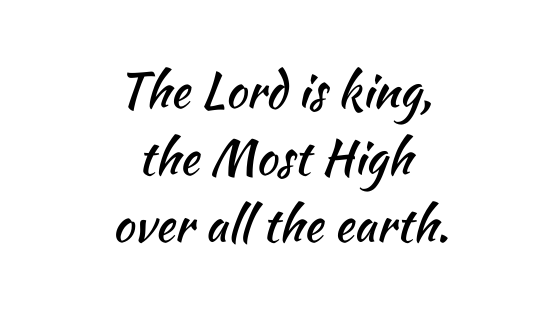
The LORD is king;
The theme of divine kingship is apparent with the traditional enthronement declaration at its start: “The LORD is king!”
let the earth rejoice; let the many isles be glad.
God’s kingship is celebrated across the globe, well beyond the confines of Israel.
The image of “many isles” (also translated as “many coastlands”) indicates the furthest reaches of the world.
Clouds and darkness are round about him,
The imagery of clouds and thick darkness surrounding God evokes the sense of his transcendence and divine mystery. It also calls to mind the cloud that descends upon Jesus and the disciples at The Transfiguration.
justice and judgment are the foundation of his throne.
In contrast to earthly regimes that often rely on brute force or military conquest, God’s rule is established upon the enduring foundation of justice (sedeq) and judgment (mishpāt).
This underscores God’s moral authority and just rule, which are divine attributes.
The mountains melt like wax before the LORD, before the LORD of all the earth.
A proclamation of God’s overwhelming power and authority. The image of mountains melting in God’s powerful presence symbolizes the subjugation of all creation before him.
The heavens proclaim his justice,
The passage ends with three phrases that declare the sovereignty of the Lord:
First, “the heavens” includes all celestial beings, which were once thought to be gods themselves. This highlights the uniqueness and supremacy of the one true God, as all celestial beings in the heavens acknowledge his righteousness and glory.
and all peoples see his glory.
Second, not only Israel but all people see God’s glory (kābôd), the splendor that shines from God’s holiness and that is usually a characteristic of divine theophany or manifestation.
The image of humankind seeing God’s glory is particularly apt for today’s feast!
Because you, O LORD, are the Most High over all the earth, exalted far above all gods.
Finally, the psalmist praises and acknowledges the supreme position of the LORD (YHWH), affirming his exalted status above all other so-called gods. The universal kingship of the LORD is beyond question.
The mention of “gods” serves as a rhetorical device to magnify the greatness of the LORD and to highlight his unparalleled position as the one true God.
God, enthroned in heaven and exalted above all others, has no rivals. There is no threat of future upheaval or rebellion. His rule will last forever.

 Sunday Readings