Psalm 45:10-12, 16
The responsorial psalm for today’s feast comes from Psalm 45, a royal wedding psalm. All attention is given to the queen, with each verse highlighting a majestic detail about her.
The connection with today’s feast is clear: Mary is the queen-mother of heaven and earth.
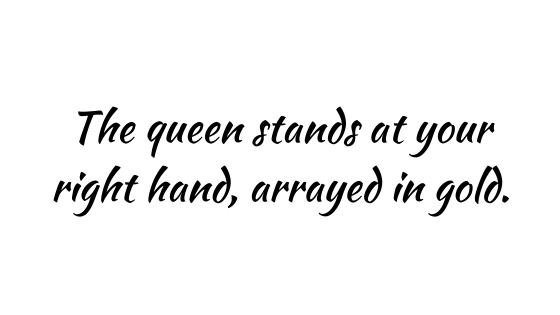
The queen takes her place at your right hand in gold of Ophir.
Immediately we are directed to three characteristics of this woman’s royal dignity:
- She is queen, the consort of the king.
- She stands at his right hand, a position of highest honor and favor.
- She is clothed in gold, symbolizing both regal splendor and spiritual worth.
Ophir was famed in the Old Testament as a distant, exotic land rich in gold and precious stones (e.g., 1 Kings 9:28; Job 28:16; Isaiah 13:12). The reference underscores the exceptional value and nobility of the queen’s adornment, emphasizing her elevated status.
Hear, O daughter, and see; turn your ear,
Using the voice of a Wisdom teacher, the psalmist addresses the queen with reverence and affection. “Daughter” implies not only youth and beauty but also a spiritual relationship, preparing her to receive instruction fitting her new role.
forget your people and your father’s house.
This line calls for a decisive break from her past. It reflects the biblical pattern of covenantal union, where the bride leaves her former ties to become wholly devoted to her husband. In a spiritual sense, it prefigures the soul’s call to forsake worldly attachments for a higher vocation.
So shall the king desire your beauty; for he is your lord.
The king’s desire is not merely romantic but reflects the esteem he holds for her inner and outer beauty: her readiness, purity, and devotion. The term “lord” (’ādôn) emphasizes his royal authority rather than a strictly marital dynamic.
They are borne in with gladness and joy; they enter the palace of the king.
This final verse evokes the joy and splendor of an ancient wedding procession. Rather than walking, the bride and her companions are carried (“borne in”), likely on adorned litters emphasizing celebration and honor.
This entry into the palace marks the beginning of a new life for the queen —foreshadowing the Assumption of Mary, whose entrance into the heavenly court inaugurates her role as Queen-Mother beside her Son, and offering us a glimpse of the Church’s ultimate union with Christ in the eternal banquet of heaven.

 Sunday Readings