Psalm 104: 1, 24, 29-31, 34
As with the Pentecost Vigil, the responsorial psalm for our Pentecost celebration is taken from Psalm 104—a majestic hymn of creation that exalts God’s greatness, glory, and sovereign rule over all.
With its elevated poetic expressions, it stands out as one of the most beautiful psalms in the entire Psalter.
Bless the LORD, O my soul! O LORD, my God, you are great indeed!
The psalms usually call others to praise God; here, the psalmist calls himself.
The Hebrew word that is translated “soul” (nephesh) comes from the word for breath. This term carries a range of meanings, including life-breath (or soul), life itself, and a living individual. In this context, nephesh likely refers to the innermost core of a person, the center of their very being.
In other words, the psalmist is calling upon every facet of their own existence to offer praise to God.
How manifold are your works, O LORD! The earth is full of your creatures.
The psalmist is overwhelmed by the marvels of God’s creation and overcome with a sense of reverence and holy awe.
If you take away their breath, they perish and return to their dust.
God is both Creator and Sustainer. Life and death follow his divine will.
When the breath of life leaves a creature, it returns to the dust it came from (Genesis 2:7, Job 12:10).
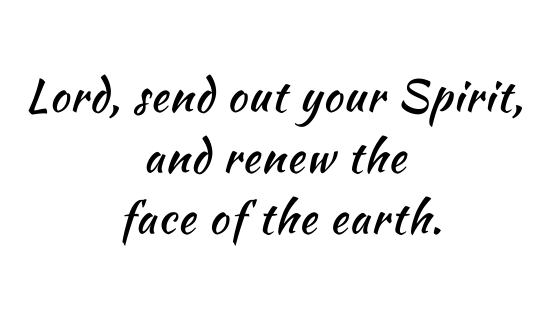
When you send forth your spirit, they are created, and you renew the face of the earth.
God not only creates but re-creates. The ongoing forces of nature constantly bring forth new life. When creatures die, new generations replace them, ensuring a continuous cycle of creation and renewal.
The face of the earth is renewed each day by the light of the sun, and from year to year by the fertility of the soil and the turning of the seasons. Creation is an ongoing event that we are privileged to witness.
God’s works are glorious indeed!
May the glory of the LORD endure forever; may the LORD be glad in his works!
The psalmist prays that God will be pleased with his creation, echoing the divine satisfaction in the beginning when God beheld all that he had made and found it very good (Genesis 1:31-2:4).
Pleasing to him be my theme; I will be glad in the LORD.
Finally, the psalmist prays that God finds his praise acceptable. This final verse can also be rendered as, May my meditation be pleasing to him, for I rejoice in the LORD.

 Sunday Readings